Gaza is ‘graveyard of international law’
At a time when it faces a choice between the rule of might and the rule of law, Europe is in denial about the nomocratic performance of its own member states, the Irish Centre for European Law (ICEL) human-rights conference has heard.
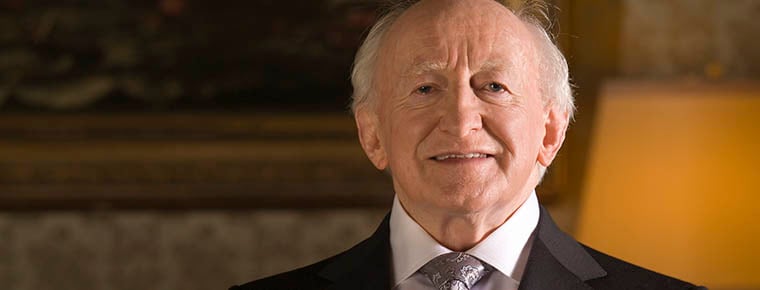
In his keynote address to the conference, held at the University of Galway (15 October), former president Michael D Higgins defined human rights as including the interconnectedness of climate change, food security, conflict, migration, and the enduring consequences of colonial exploitation.
Serious price
Higgins said that those least responsible for global warming were paying the most serious price.
However, political debate has moved away from shared responsibility towards militarisation, border control, the portrayal of people from other cultures as threats, and language laced with “clear racism”.
Gaza and Palestine exposed the gap between European principles and practice, he said, while also questioning how, in a place where 90% of buildings had been destroyed, it could be “reasonable” for any government to refuse student visas because of a lack of original documentation.
The absence of discourse, silence on law-breaking, and impunity for those who transgress had led to the weakening of international institutions and a loss of rights that, in turn, created the possibility of endless wars and civilian devastation, he stated.
Severely damaged
The EU's reputation had been severely damaged by the silence of so many members about the regular and increasing breaches of humanitarian and international law, Higgins said.
The question for Europe is therefore not only whether it speaks out when human rights are violated elsewhere, but whether its own policies and actions reflect the universal principles it claims to uphold and the will of its people.
“Among the public, there is actually a moral consciousness that is, in my view, a great resource for the future,” he stated.
Blinne Ní Ghrálaigh KC, who is also on the International Criminal Court’s list of counsel, said international law was facing an unprecedented assault “as the rule of brute power and raw power reasserts itself”.
The scale and openness of the crimes committed in Gaza, with perpetrators broadcasting their actions and expressing their intent, had exposed the failure of the international community to intervene, she said.
Ní Ghrálaigh said that not only were states “violating international law with impunity, they are going to the heart of the international legal system, to the United Nations, to brag about their unlawfulness and to threaten yet further still”.
In parallel, there has been an “unprecedented assault” on the institutions of international law.
In addition to US sanctions on ICC judges and staff, Ní Ghrálaigh said: “Britain, for example, threatened the ICC with defunding if they pursued the arrest warrants against Israel.”
The KC also highlighted that states that were doing “so little to combat these grave breaches of international law”, were cracking down on their own citizens for speaking out.
Referencing the proscription in Britain of Palestine Action, Ní Ghrálaigh said: “it is extraordinary that, as a result of that, the average profile of a terrorist in Britain right now is a 60-year-old holding a placard.”
For this reason, Ní Ghrálaigh said, Gaza could become “the graveyard of international law, because a rule of law that doesn't apply universally is no rule of law at all”.
However, she also noted the pushback emerging from the Global South and civil society.
States with histories of oppression and colonisation are using international legal institutions to challenge powerful countries, with South Africa’s case against Israel, and Nicaragua’s case against Germany over its continued supply of weapons to Israel, representing developments “that would have been unheard of and unthinkable 20 years ago”.
Veil of impunity
The international courts have continued to act despite political pressure, “puncturing the veil of impunity for the first time”.
The resilience of these institutions makes this a critical moment for international law, but also one in which there remains a possibility of its reassertion.
The KC expressed the hope that, under Ireland’s presidency, the EU would enact the blocking statute, which would not only show support to the ICC, “it would assist in saving the court from being sanctioned out of assistance”.
She also urged the EU to suspend its Association Agreement with Israel and introduce an EU-wide ban on trade in services.
“We lawyers have a particular role to play to ensure that the rule of law stands domestically and internationally, and that governments are held to account for their failings,” she stated.
Professor Laurent Pech of UCD echoed the sentiment: “When the EU doesn't do what it's supposed to be doing, then it's for us to do the right thing”.
Unprecedented action
He explained his involvement in a current, unprecedented action in which associations of European judges, frustrated by EU inaction and complicity over a rule-of-law matter in Poland, have brought a strategic litigation case against the European Commission and Council, alleging that they had disregarded the Court of Justice’s rule-of-law case law.
“We're facing major legal standing issues”, Pech said, “but if you don't try, you don't win.”
“This is the first time the Court of Justice is going to be given the opportunity to change legal standing requirements when it comes to strategic litigation initiated by associations,” he went on.
Although related to a specific situation, “this case is going to directly impact what can be done on other issues,” he said.